
Rancho Cordova Resident Lookup Guide
Every record answers a different question. An assessment roll speaks to ownership and tax-mailing data. A deed names who transferred what. A court docket lists parties and events. A vital record confirms an event under its own access rules. A voter portal verifies one's own registration, while business, license, directory, and obituary files add public affiliation and historical context to any Rancho Cordova resident lookup.
| Record | What it confirms | Where | Access |
|---|---|---|---|
| Assessment roll | Ownership, tax-mailing and situs relationship | County Assessor | Owner fields by lobby or request |
| Recorded deed | Named parties and property transfer | Clerk/Recorder | Index since 1849; order image |
| Voter status | Authenticated registration, address, party, and status | County or state portal | Self-lookup; files restricted |
| Court docket | Party name, case events, and public documents | Sacramento Superior Court | Coverage varies by division and date |
| Vital index or copy | Birth, death, marriage, or dissolution event | County or CDPH | Informational and authorized rules |
| Business or license file | Entity, agent, license status, or discipline | SOS, DCA, county, or city | Free searches; filings vary |
Never rely on one record alone. A matching name proves little by itself in Rancho Cordova. Check that the source fits the question. Make sure the dates line up before calling a result the right resident. A careful resident lookup keeps the original source, date, and access limit beside every name.
Rancho Cordova Resident Identity Match
Identity matching starts with exact spelling. Then widen carefully. Keep a middle initial, former surname, spouse, occupation, APN, case role, entity number, or event date when the record offers one. Mailing addresses mislead. A PO box, trust, property manager, or another parcel can stand in for the owner, a license address may be an office, and a matching court name may belong to someone else in the county.
- Write the known name in its original form, including initials, compound surnames, and alternate spellings.
- Choose the record tied to the strongest clue, such as an APN for property or a case number for court.
- Compare a second independent source using date, place, spouse, occupation, address, or entity context.
- Mark the result as confirmed, probable, or unresolved. Do not fill a gap with a guess.
California courts say it plainly. A name match is not a fingerprint match. That caution extends to deeds, licenses, voter clues, and city directory entries, so an honest unresolved result serves a Rancho Cordova resident lookup better than an overconfident identity claim.
- Docket
- The court's running record of a case, events, filings, and status entries.
- Index
- A pointer to a record or citation, not necessarily the full document.
- Certified copy
- A copy formally attested by the custodian for an authorized purpose.
Rancho Cordova Court Lookup Modes
The Sacramento Superior Court case-search page separates criminal, civil, family, probate, traffic, and small-claims searches. Each type follows its own route. Criminal Public Case Access covers Sacramento filings from 1989 forward. Civil public documents generally cover cases initiated after November 13, 2007. Older files require the Civil Records Unit. Family, probate, and traffic keep their own access rules.
| Search field or mode | Use |
|---|---|
| Search by name | Choose criminal or family name mode. |
| Last and first name | Enter exact criteria, then test spelling variants. |
| Date of birth | Use when the mode offers it as an identity aid. |
| Case number | Use division-specific case search when known. |
| Filing date | Available in the family search route. |
| Driver license or citation number | Use the traffic mode for a self or case lookup. |
A public docket holds a lot. Case number, title, filing date, and type come through. Parties, roles, hearings, register-of-actions entries, document links, and an entered disposition may appear too. Sealed, juvenile, and adoption records stay out of view. The Sacramento court portal notice explains the 2023 case-management conversion, the new public-user account, and the coverage cutoff affecting some current access. The separate criminal search screen places its name-search warning beside the public access route.
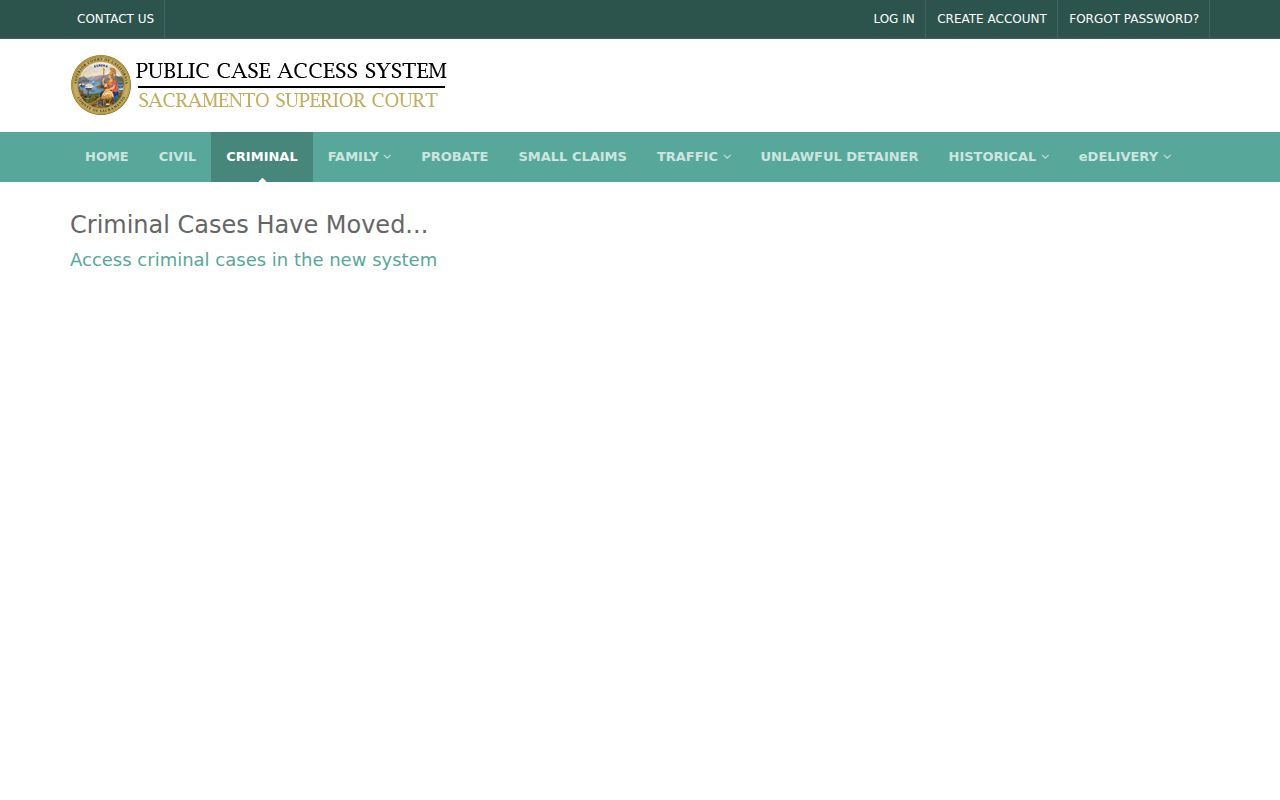
A docket is a case record, not an address. Compare any court result with a dated address or another custodian's record before treating the party as the Rancho Cordova resident you seek.
Rancho Cordova Voter Status
Checking voter status is a self-service task in Rancho Cordova. The county's My Voter Portal wants a street number, a ZIP code, and a date of birth. California's My Voter Status route takes a first name, last name, and date of birth. It also wants conditional identification details, or you can use the alternative path. Once you authenticate, either tool can display registration location, party preference, and language preference. Polling place, upcoming election details, county contact, and vote-by-mail or provisional-ballot status appear too. Neither one is a public name index.
Access to the underlying file is tightly restricted. California Elections Code sections 2188 and 2194 confine voter-file release to approved candidates or committees. Release also goes to persons with election, scholarly, journalistic, political, or governmental purposes. Driver-license numbers, Social Security numbers, and signatures are never supplied. Safe at Home participants and other confidential voters receive special protection.
For those who qualify, the Sacramento County voter-file information page lays out the requirements. You submit an application, a driver-license copy, and payment. An $80 voter file and a $105 custom file are the paid options, with paid activity subscriptions too. Preparation takes a targeted 72 business hours after approval. California's state voter-file request rules describe the separate statewide process. The agreement limits use and redistribution, and Elections Code section 18109 sets penalties for unauthorized use.
The statewide voter-status form is a good illustration. It shows the line a residents directory has to respect. Self-service status checks are open to the voter. The file itself is not.
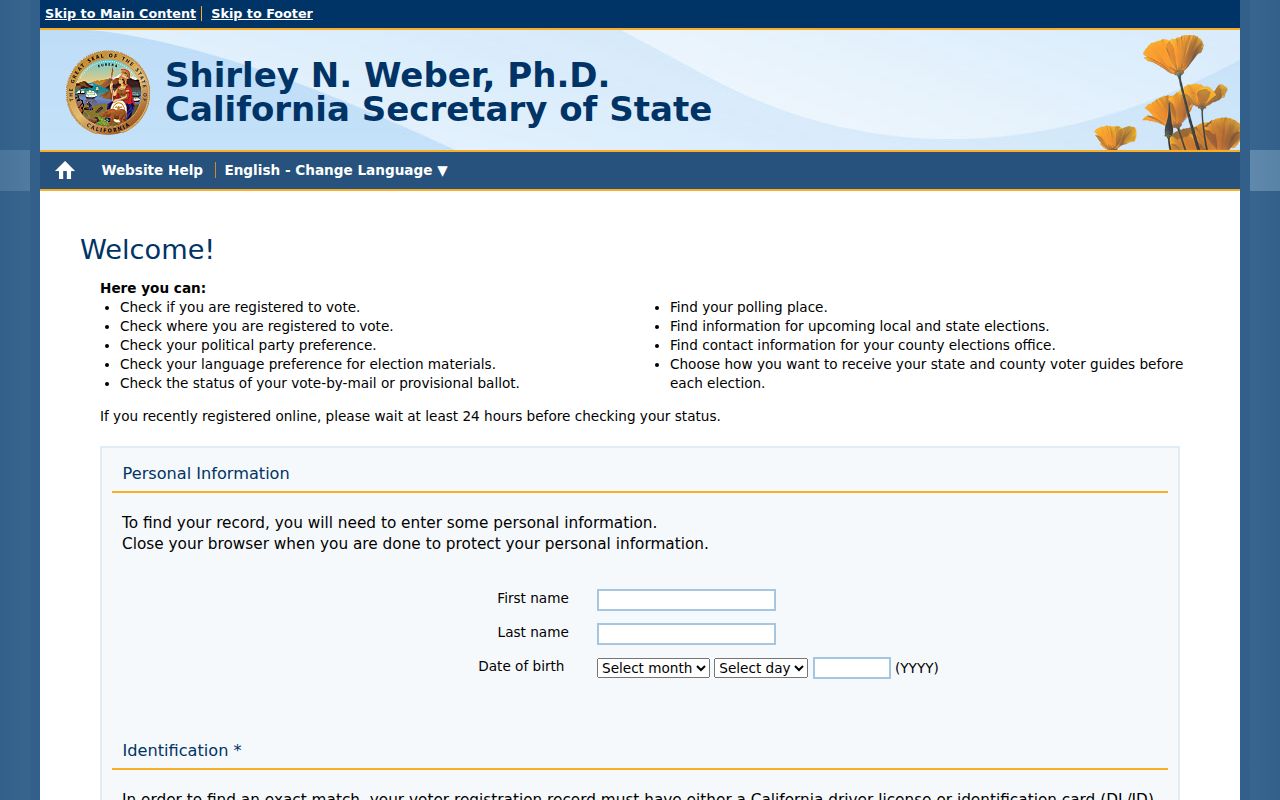
An authenticated voter result belongs to the person who owns the entry. It is not a license to publish a street roster. Federal cases follow a different route. PACER searches Eastern District of California party and case data, and its access charges and fee-waiver rules deserve a check before ordering.
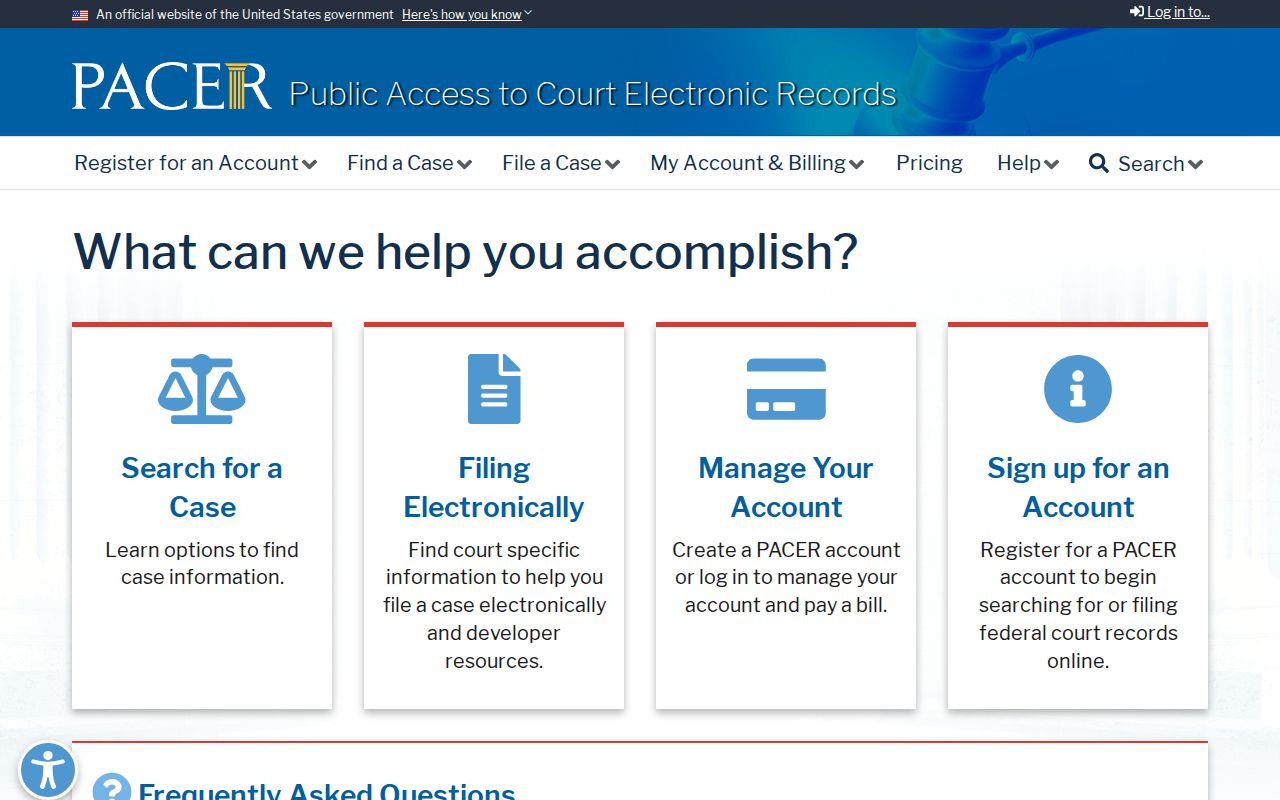
A federal docket proves a case, not a resident.
Rancho Cordova Vital Record Lookup
Vital records anchor many Rancho Cordova lookup projects, but they answer one narrow question. A certificate confirms that an event happened. It does not prove where someone lives now. The Sacramento County Recorder holds records for county events. CDPH keeps the statewide files for California. A general requester can often obtain an informational certified copy of a public birth, death, or marriage record. The legend on it bars any use for identity. An authorized copy demands a statutory relationship or legal category. It also requires a sworn statement and the correct application.
For 2026, CDPH lists birth at $31. Death sits at $26, marriage at $19, and dissolution at $18. The county prices birth at $34. Death and marriage match the state figures. Confidential marriage certificates stay restricted under Family Code section 509. Adoption originals remain sealed absent proper authority. California applies no simple 100-year birth or 50-year death opening rule. The CDPH vital-record fee page and the VS 111 application lay out copy type and eligibility. They also cover sworn acknowledgment and the payment route. County microfiche indexes can also establish a name and event year. That helps before anyone orders a certificate.
Rancho Cordova Heirs and Resident Records
Heir research in Rancho Cordova works best as a chain, not a single search. Start with the decedent's event record, an obituary, or known property. Search Sacramento probate under the decedent's name. Then read the petitions, notices, heirs, counsel, and later orders. A recorded deed tests whether the property actually moved. A will's mention of a parcel is only a clue. The deed controls the title chain. Death evidence, probate, and the Recorder thus form one sequence.
A birth-parent question belongs in California's official adoption-information and consent mechanisms. These operate through the state, county, or court. A sealed adoption file does not open through a residents directory search. For a former classmate, yearbooks, library collections, and newspapers offer a safer path. A public professional affiliation can help too. That beats an unverified name match. Personal history stays strongest when it respects the access boundary. Stop where a court file is sealed. Stop where a protected address appears. Or stop where the next fact would demand a private household source.
Rancho Cordova Business Record Lookup
A public business connection gives a Rancho Cordova lookup three files to compare. California Secretary of State bizfile Online shows entity number, status, type, jurisdiction, addresses, agent for service, and Statements of Information. Sacramento County fictitious business name records can reveal a registrant and filing date. Rancho Cordova city licenses or permit files may add a local address or applicant. Public search fields vary by city.
Professional affiliations run through the California Department of Consumer Affairs search or a board's own database. A license status, issue or expiration date, discipline link, or license address is an affiliation clue. It is nothing more. An agent-for-service address rarely marks the person's home. A city license proves a local license record, not ownership. The file must say so plainly. Keep the entity number, filing date, license number, and address together. Those fields separate a live business record from an old directory entry with a similar name.
Rancho Cordova Unclaimed Property Leads
California's Controller unclaimed-property search takes a last or business name plus property ID. Optional fields cover first name, city, and ZIP. Results can list a reported owner and the reporting business. They can also show property type, an amount range, and a last-known city or ZIP. The search is free. It works well as a historical clue. Use it when a former address or business relationship has gone cold.
It is not current residence proof. Similar-name matches go wrong. An old last-known city may describe the reporting record rather than any present location. Verify a promising hit with a deed, probate file, business filing, or another custodian source. Treat the result as a lead in any resident lookup, never a conclusion. Do not pay a recovery service to run a free official search. The same name-to-place caution applies to every residents directory tool. A result supplies the next question, not a second record's replacement.
Rancho Cordova Record Corrections
No directory publisher can fix an official record, so corrections route to the custodian. Send ownership or mailing issues to the Assessor. Deed indexing or copy problems go to the Recorder. Voter questions go to Elections. Docket matters belong to the Superior Court, and vital-record amendments run through CDPH or the county process. When no online result appears, a focused California Public Records Act request can ask for an existing record. Give the custodian a department, record type, name, APN or address, and date span.
Under Government Code section 7920.000 and following, an agency ordinarily makes an initial determination within ten calendar days. It may extend that by up to fourteen days in unusual circumstances. The law does not force an agency to build a new roster. It also does not treat a question as a record. Some identity questions end unresolved. That outcome, paired with a clear correction route, protects both the person named and the integrity of the Rancho Cordova resident lookup.
Rancho Cordova Resident Lookup Limits
California shields DMV records through the federal Driver's Privacy Protection Act. Safe at Home adds another layer. It gives qualifying participants a substitute address and keeps their voter registration confidential. Sealed court files and adoption papers stay closed. Family, probate, and sensitive vital records do too. Public records remain open for lawful personal research. Access, though, does not make every use safe or permitted.
Lawful use. Use a Rancho Cordova resident lookup for family history, property research, civic review, or lawful reconnection. Do not use a name result to stalk, harass, intimidate, or harm anyone. When the official source stops, the search stops.
Commercial compilation tools blend public, licensed, and inferred data into one profile. Merges can pair same-name records, and updates lag behind corrections at the source. No tool is authoritative. None can override the access rules that guard voter, DMV, court, or vital records. A careful Rancho Cordova resident lookup keeps the source, the date, and the uncertainty level attached to every claim. It labels each claim with its origin. It notes when the data was pulled.
For an address-centered question, the next stop is the Rancho Cordova street directory. For history, start with the Rancho Cordova city directory collections.