
Rancho Cordova's Directory Collections
The collection story comes first because Rancho Cordova matured as a suburb of Sacramento. A searcher should look for Sacramento city, county, suburban, telephone, and reverse volumes instead of waiting for a standalone nineteenth-century Rancho Cordova title. The years below are documented collection ranges or examples, not a promise that every annual volume survives.
| Collection | Years | Where held | Access |
|---|---|---|---|
| Sacramento area city and telephone books | 1850-2019 | Center for Sacramento History | Finding aid and local research appointment |
| Sacramento city-directory microfilm | 1860-1936 | Center for Sacramento History | Microfilm research |
| Printed Sacramento sequence | Through 1982 | Sacramento Room, State Library, CSH | Collection and title checks |
| Sacramento City and Suburban | 1984-2018 examples | Center for Sacramento History and local collections | Haines reverse and criss-cross work |
| Library genealogy databases | Variable years | Sacramento Public Library | Library licensing and on-site rules vary |
| Federal census | 1790-1950 public | NARA and library databases | 72-year release rule |
The Center for Sacramento History finding aid describes publishers, formats, and collection scope. The shelf is broad enough to bridge the Gold Rush city, suburban Rancho Cordova, and the telephone era. Check the box or title list before stating that a particular year is present.
Rancho Cordova's 1851 Directory First
James Horace Culver's Directory for the Year 1851 is a local records milestone. The Center for Sacramento History describes it as the first book published in Sacramento and the first West Coast city directory to list numbered street addresses. Rancho Cordova was not yet an incorporated city, so the value is regional: early Sacramento names, occupations, and numbered places supply context for land and family research before the modern city label existed.
A directory entry is not a deed. It can show where a person was listed and what occupation or household clue the publisher recorded. Pair that clue with a Sacramento County deed, probate file, newspaper notice, cemetery record, or later directory. The older the volume, the more important it is to keep the original spelling and page citation.
This local story is useful because it explains why a Rancho Cordova city directory search belongs on a Sacramento shelf. The collection follows the region's growth rather than the later boundary of one municipality.
The historical directory finding aid records the collection's long shift from early city books to suburban products.
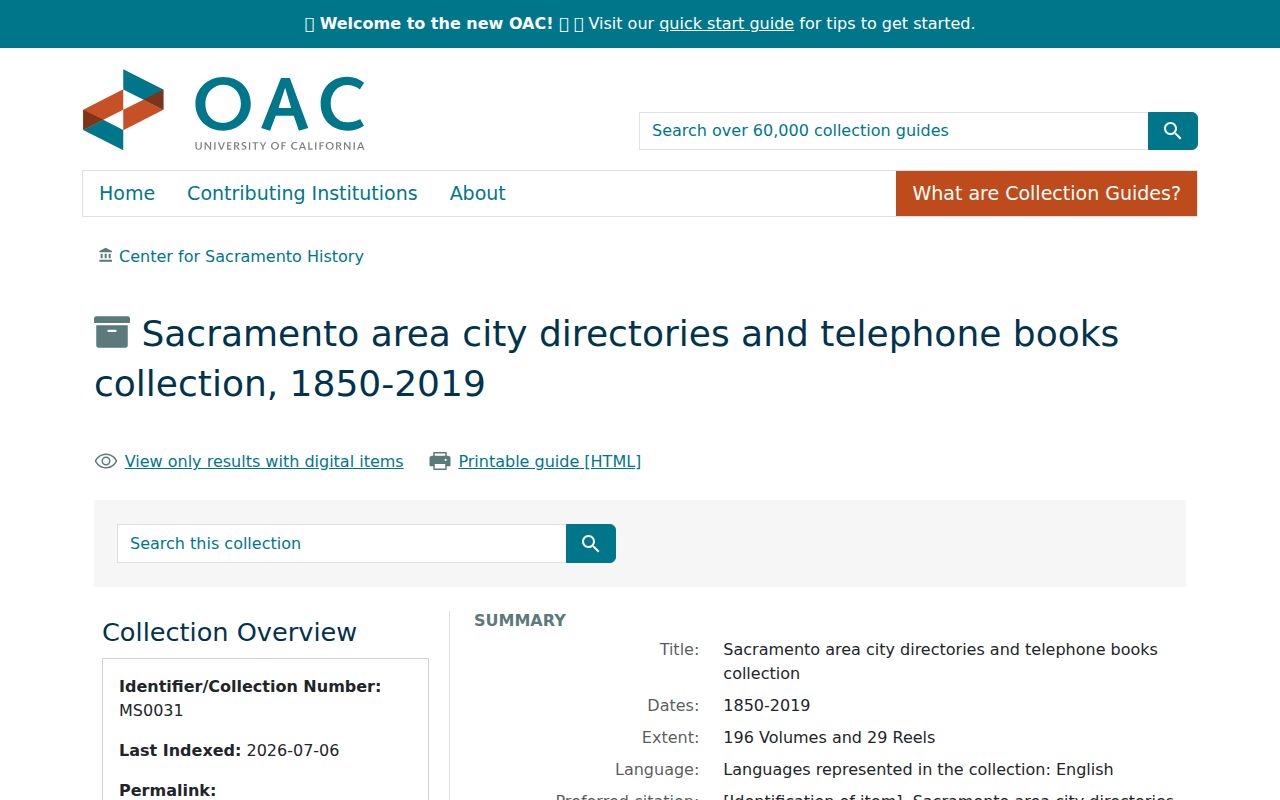
That regional scope is the reason an old Rancho Cordova address may appear under Sacramento, Mills, Mather, Brighton, or another suburban description.
Rancho Cordova City Directory Microfilm
Microfilm carries Sacramento city directories from 1860 through 1936. Later Sacramento Directory Company and R.L. Polk or Polk and Sons volumes extend the printed sequence through 1982. Official Sacramento historical studies show usable annual or near-annual examples such as 1921-1929, 1935, 1939-1949, 1952, 1957-1958, and 1961-1982. These are evidence of a working sequence, not a guarantee that every missing year is on the shelf.
When a Rancho Cordova city directory moves from a city format to a suburban format, the search method changes. Alphabetical pages still help with surname and occupation. Street or reverse pages become more useful for a known address. Write down the publisher, year, page, and section so a later researcher can tell a true omission from a missed volume.
| Period | Collection change |
|---|---|
| 1851 | Culver's first Sacramento directory lists numbered street addresses. |
| 1860-1936 | Sacramento city directories are documented on microfilm. |
| Through 1982 | Printed Sacramento Directory Company and Polk sequences continue. |
| 1984-2018 | Haines city-and-suburban and criss-cross examples carry the suburban layer. |
| Through 2019 | Telephone books extend the broader Sacramento-area collection. |
The California State Library Sacramento research guide directs researchers to city-directory and telephone-book databases by searching for Sacramento. Use it for title and year confirmation, then use the physical collection for pages or formats the database does not show.
Rancho Cordova Polk to Haines Books
Haines Sacramento City and Suburban directories document examples from 1984 through 2018. Their criss-cross format is especially useful for Rancho Cordova because the address, rather than the surname, can be the stable clue. A reverse page may list an occupant and telephone. The alphabetical section can add a spouse, occupation, employer, or abbreviation. The same address can therefore be read in both formats.
Do not treat publisher changes as a clean break in residence. A household can appear under a new product, a new postal label, or a different canvass area. Search neighboring years, alternate surnames, initials, spouse names, and employer clues. If a page is absent, record the gap and test the surrounding volumes instead of filling it with an assumption.
Haines is a bridge between the older city directory shelf and modern parcel records. Once a historic entry supplies a name or year, the current address workflow can test that clue against deeds or permits without rebuilding the whole street search.
Reading a Rancho Cordova Directory Entry
A city directory compresses a household into short marks. Read the entry as a set of clues, not a complete biography. The page may combine an alphabetical listing, an occupation abbreviation, a residence address, and a reverse street section. A household can be present in one section and absent in another because the publisher used separate canvass or telephone rules.
| Entry detail | What it can mean |
|---|---|
| Surname and given name | Primary name form; test initials and alternate spellings. |
| Spouse in parentheses | A household link that can separate same-name entries. |
| Occupation abbreviation | Work or trade clue; confirm the publisher's key. |
| “h” or “r” mark | Usually home or room/residence notation in the cited collection. |
| Street and number | Place clue for a reverse scan and later parcel match. |
| Business address | Public work location, which may differ from residence. |
- Householder index
- An index centered on the person or household listed at an address.
- Abbreviation key
- The publisher's legend for occupations, status marks, or address notes.
- Criss-cross
- A reverse directory that begins with an address or telephone.
Use the page image or microfilm frame when possible. A typed transcription can lose a small mark that changes the reading. The full current identity check belongs in a Rancho Cordova resident lookup only after the historical entry is anchored to a date and place.
Trace Rancho Cordova Directory Households
One directory year rarely answers a whole family question. A year-by-year trace is stronger. Start with a known address or name, read the alphabetical and reverse sections, and record the first and last appearances. Pair a 1950 or earlier entry with the public federal census, then test changes against deeds, probate, newspapers, permits, or the vital index.
- Write the exact surname, given name, spouse, occupation, and address from the known volume.
- Check the next available directory year in the same publisher family, then repeat through the surrounding years.
- Scan the street section for neighbors, address shifts, and alternate household spellings.
- Compare the 1950 or earlier household with the public census, keeping the 72-year release limit in mind.
- Confirm a move, death, or ownership change with a deed, probate, obituary, or other custodian record.
A first appearance is not always a move-in date. A last appearance is not always a move-out date. Directory canvass timing and publication lag can blur both. The method is still powerful because repeated address, spouse, occupation, and neighbor clues can distinguish a person from a same-name entry.
Rancho Cordova City Directory at Sacramento Room
The Sacramento Room at Central Library holds city, county, and telephone directories with clipping files, photographs, maps, manuscripts, ephemera, and rare or special collections. Staff help is part of the value. A librarian can point to a box, title, reverse-directory format, or local newspaper route that a broad online query would miss.
The Sacramento Public Library genealogy service also advertises Ancestry Library Edition, with census, city directory, military, wills, and probate material, plus Newspapers.com World Edition for newspaper and obituary searching. Access and remote rules vary, and Ancestry Library Edition is generally an in-library resource. Treat a database hit as a finding aid until the underlying image and collection context are checked.
The local-history shelf is especially important when a standalone Rancho Cordova city directory does not exist. It can connect an address to the Sacramento-area name that later appears in a parcel, deed, or probate file.
The Sacramento Room page identifies the local-history setting where directory and newspaper layers meet.
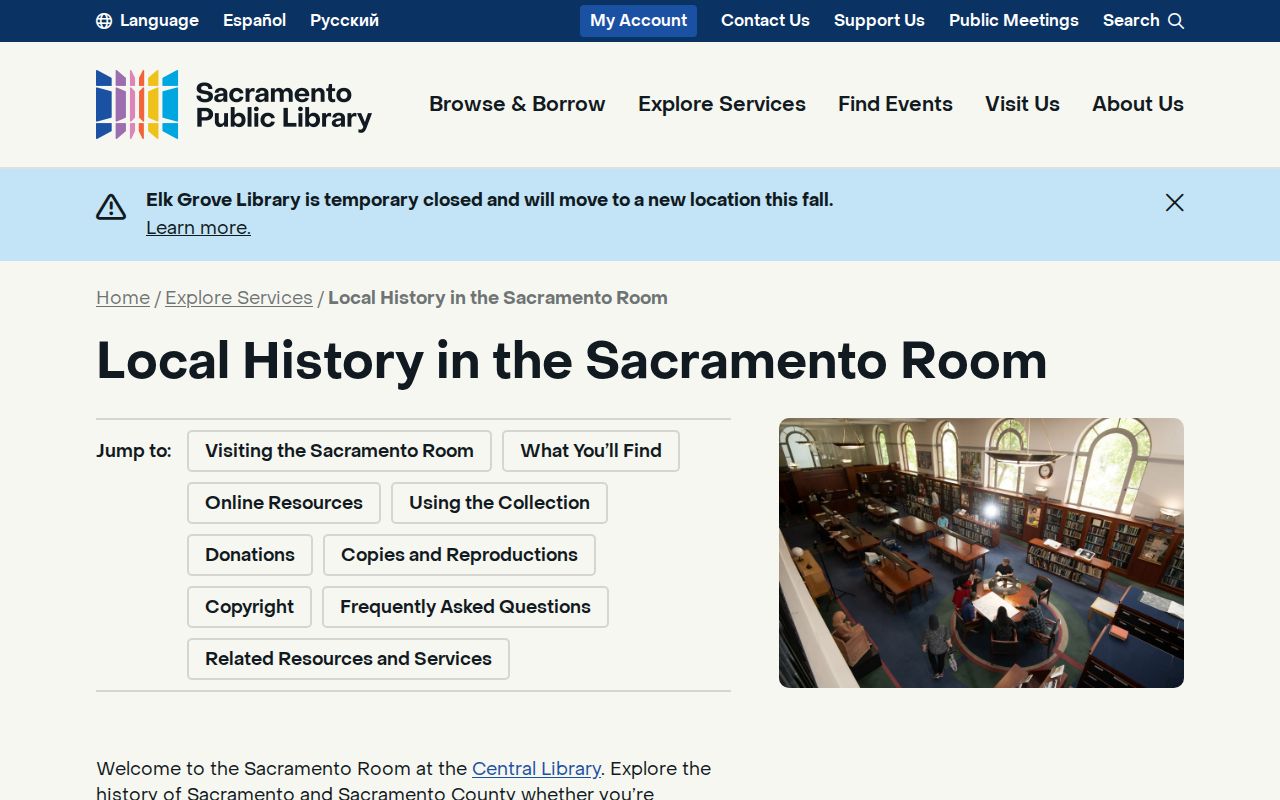
That shelf context helps a researcher choose the right volume before spending time on a page-by-page search.
Rancho Cordova Directory Year Gaps
A gap in a Rancho Cordova city directory does not establish that a household moved. The publisher may have changed coverage, the library may lack a volume, the telephone listing may have been unlisted, or the address may have been indexed under a different place label. The finding aid's box-level list should be checked before calling the sequence continuous or incomplete.
Use neighboring years, a different publisher, the reverse section, and the Sacramento newspaper archive. Then compare the address with the Assessor parcel, deed chain, or permit history. A directory omission is a research clue. It is not a fact about a resident.
Sanborn fire-insurance coverage is not a safe substitute. The Library of Congress has Folsom sheets from 1891 and historic Sacramento material, but no standalone Rancho Cordova Sanborn series was verified. County maps, subdivision plats, aerials, assessor maps, and permits are the better documented alternatives for the suburban era.
Rancho Cordova Telephone Books to 2019
The broader Sacramento area collection runs through 2019 because telephone books continue after printed city directories change form. They can add an address, phone listing, business name, or household spelling. They can also leave out unlisted numbers and may use a delivery address or business location. A telephone entry should be paired with an official property, court, vital, license, or probate record when identity matters.
Newspaper obituaries and funeral-home notices can explain a last appearance, connect relatives, or supply a former city. Verify the event against county or California death records when possible. The obituary is a secondary clue, while the certificate or index belongs to the custodian.
The historical city directory trail ends most usefully when it produces a dated address that another record can test. A modern address question then belongs with the street-by-street parcel and deed method.
The genealogy collection page shows the digital and library services that supplement a physical Rancho Cordova city directory search.
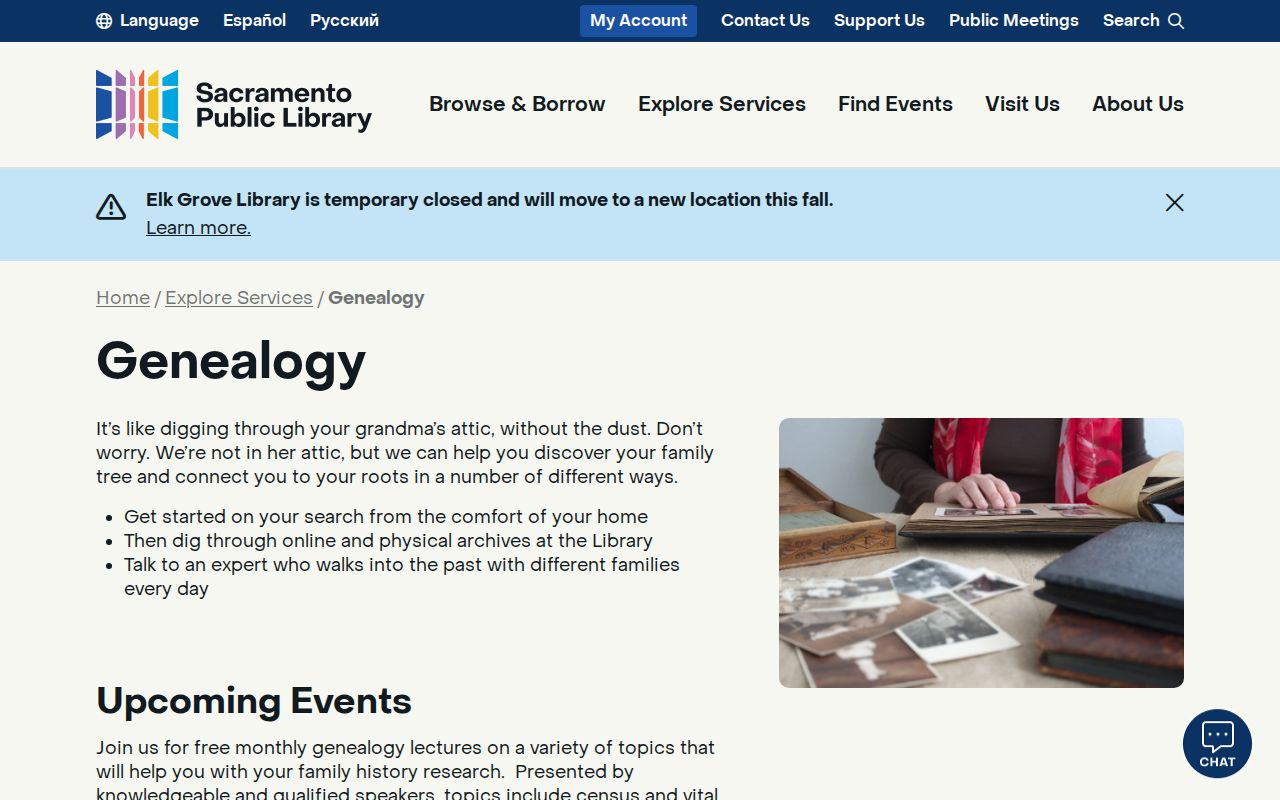
Used together, telephone books, newspapers, directories, and official records can turn a name from one year into a careful household timeline.